Lubbock, TX
(806) 548-1260

Gates, fencing, welding, wind energy

Six services, no catalog talk.

Gate style is decided by three things: the opening, the approach into it, and the ground it sits on, not by a page in a catalog. A ranch entrance forty feet wide with caliche underfoot gets a different answer than a pool gate on a slab in town, and a wind-corridor jobsite gets a different one again. What follows is the six things the shop actually builds, each with its own page, because “we do fencing too” has never told anyone what that means on their own property.

The six services

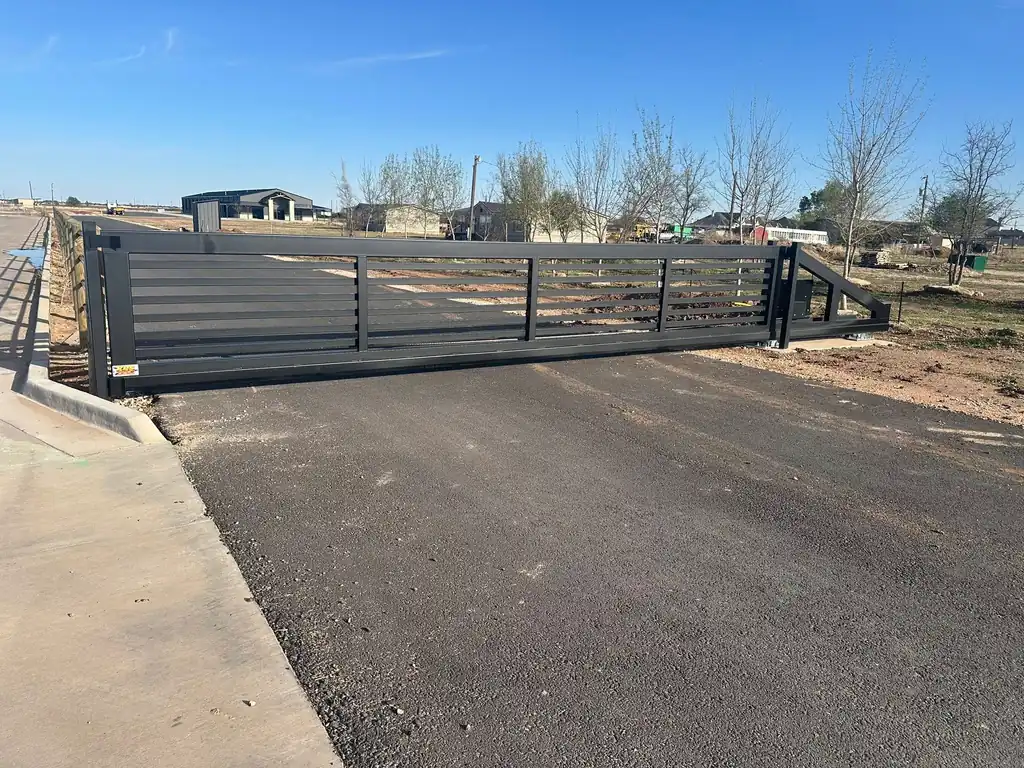
A very wide horizontal-slat cantilever slide gate spanning a new-build lot under a West Texas sky

Gates

Custom slide gates

Most wide Lubbock openings end up cantilever, not because it looks better but because a rolling gate with a track in the drive fills with caliche and gravel and eventually binds. A cantilever leaf carries its own weight on rollers set back on the fence line, so nothing crosses the drive and nothing catches a trailer hitch. The counterbalance truss is the real engineering problem: sized to the opening, welded square on the bench, set on its own concrete before the leaf goes on a truck.

Read about custom slide gates
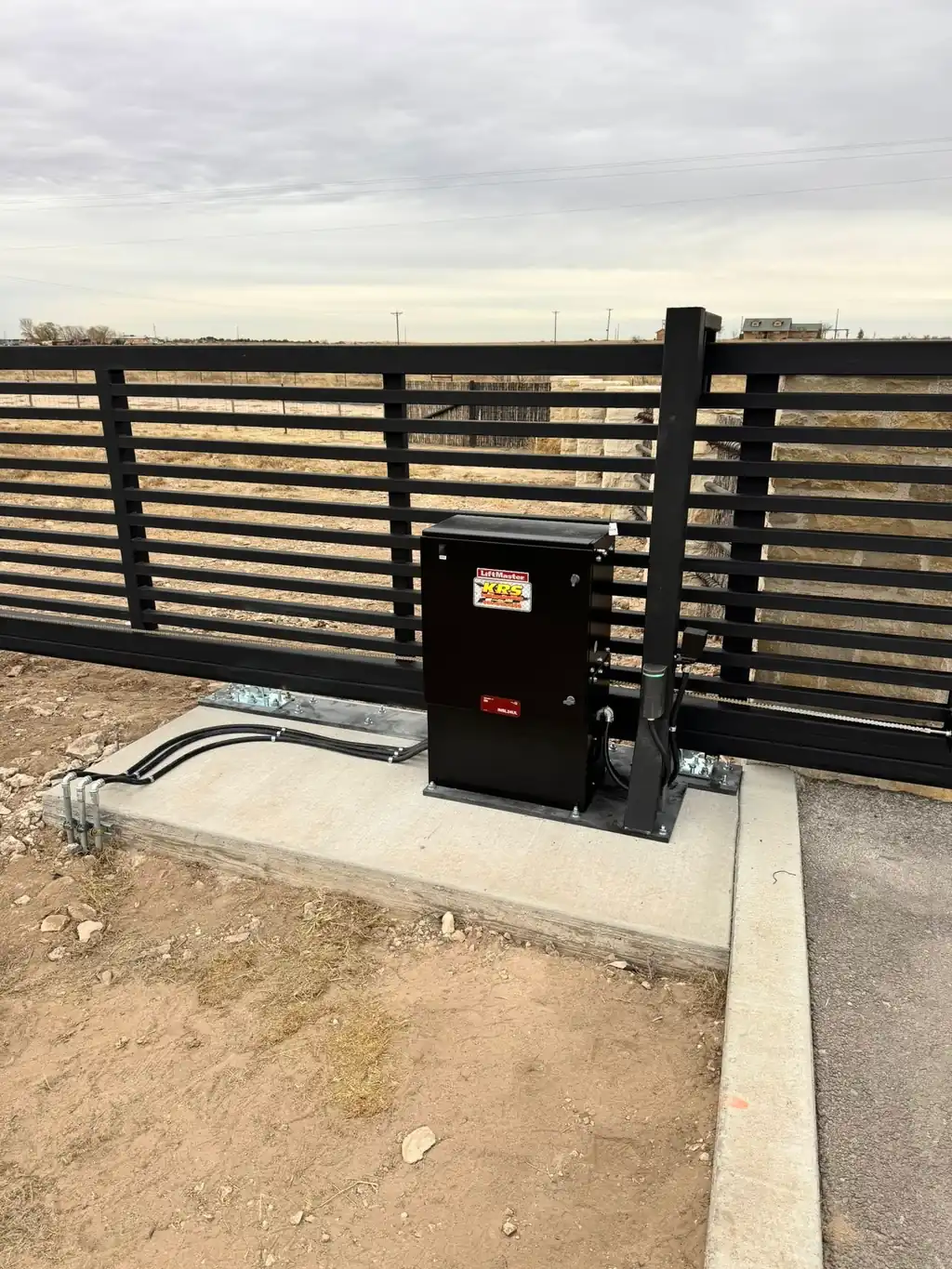
A LiftMaster gate operator with the KRS service sticker, mounted beside a slat gate

Automation

Automatic gate operators

The operator usually fails before the steel does: dust in the cabinet, a board that has spent a summer in full sun, a limit that has drifted after a season of thermal movement. A gate only gets automated once it is checked for true and free travel by hand, because no operator fixes a hinge problem. And the shop that welded the gate is the one that answers the service call afterwards, which is what the reviews on this site actually describe.

Read about automatic gate operators
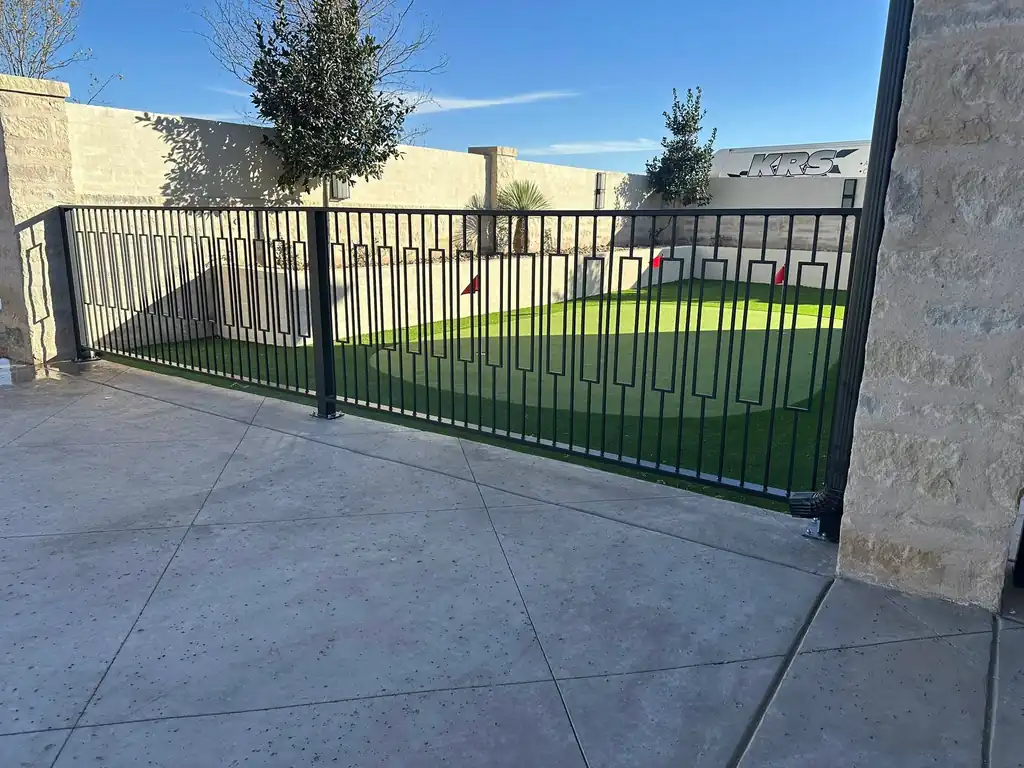
A decorative metal fence panel with a rectangular inset motif running above a putting green

Fencing

Metal fencing

Picket, panel and ornamental ironwork all fail in different ways: thin picket bows between posts, solid panel catches wind, and decorative welds go undressed where they will be seen from four feet away. Post depth and concrete are sized to the run and the exposure, crowned so water runs away from the base instead of pooling at it. The fence and the gate that hangs in it get drawn by the same shop, so the picket rhythm carries through the opening instead of breaking at it.

Read about metal fencing
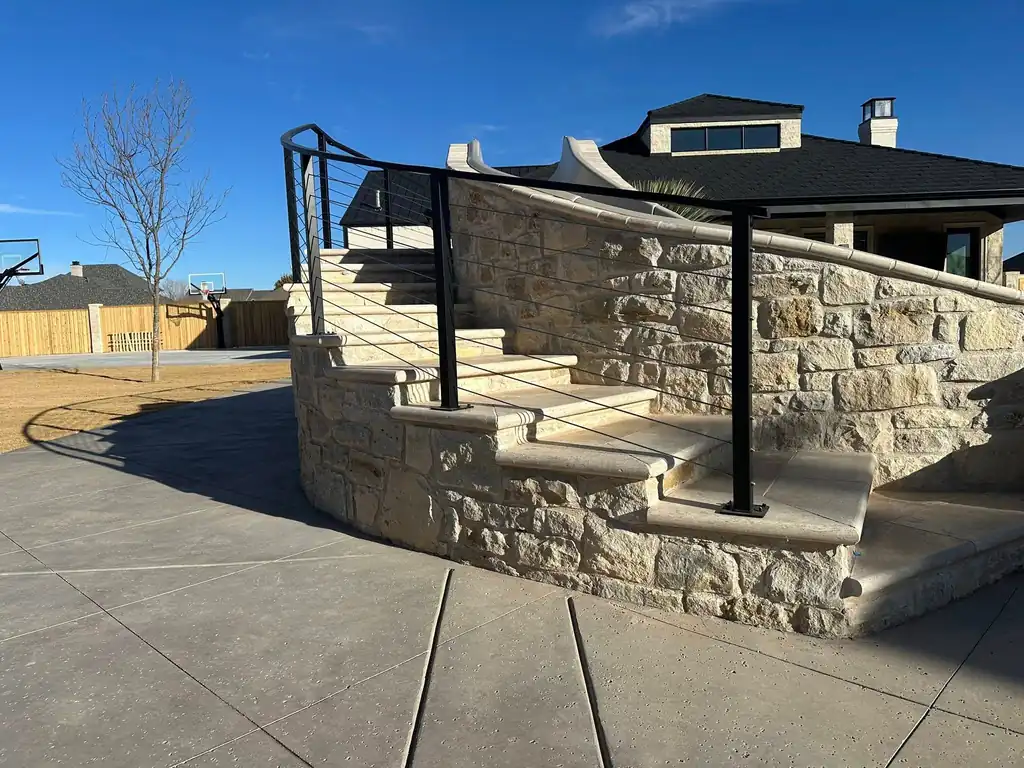
A curved cable-rail stair railing following a limestone garden wall

Shop work

Metal fabrication

Handrail, cable rail, bollards, brackets, a rolling library ladder on a rail: one-off pieces measured and drawn before they are cut, not shimmed to fit on site. A photo, a dimension between two things that already exist, and what the piece has to carry or resist is usually enough to say whether it is a bench job or a site visit. Repair work runs the other direction, a cracked bracket or a bent rail gets clamped and welded properly in the shop rather than fixed overhead in the wind.

Read about metal fabrication
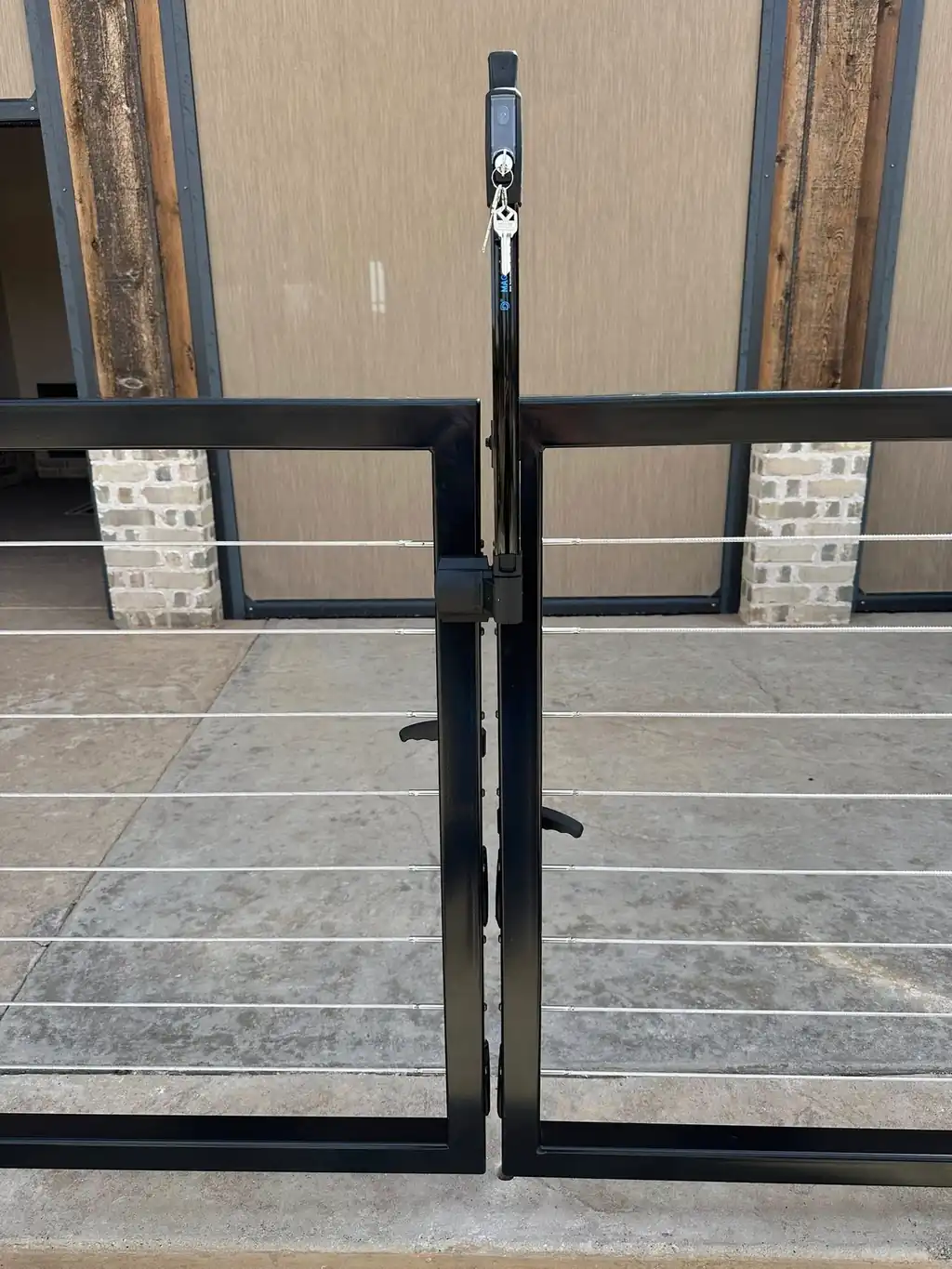
Close detail of a matched pair of cable-rail gates with MagnaLatch hardware

Welding

Aluminum welding

Aluminum is not thin steel. It conducts heat away fast, carries an oxide layer that melts well above the metal underneath, and goes from solid to puddle with very little warning, which is why some shops send it out rather than take it on. This one lists it as one of its four services: cleaned to bright metal, correct filler for the alloy, heat managed for the section. Most of what comes through the door is repair, and if a part is fatigued the whole length the honest answer is a replacement, not another bead.

Read about aluminum welding
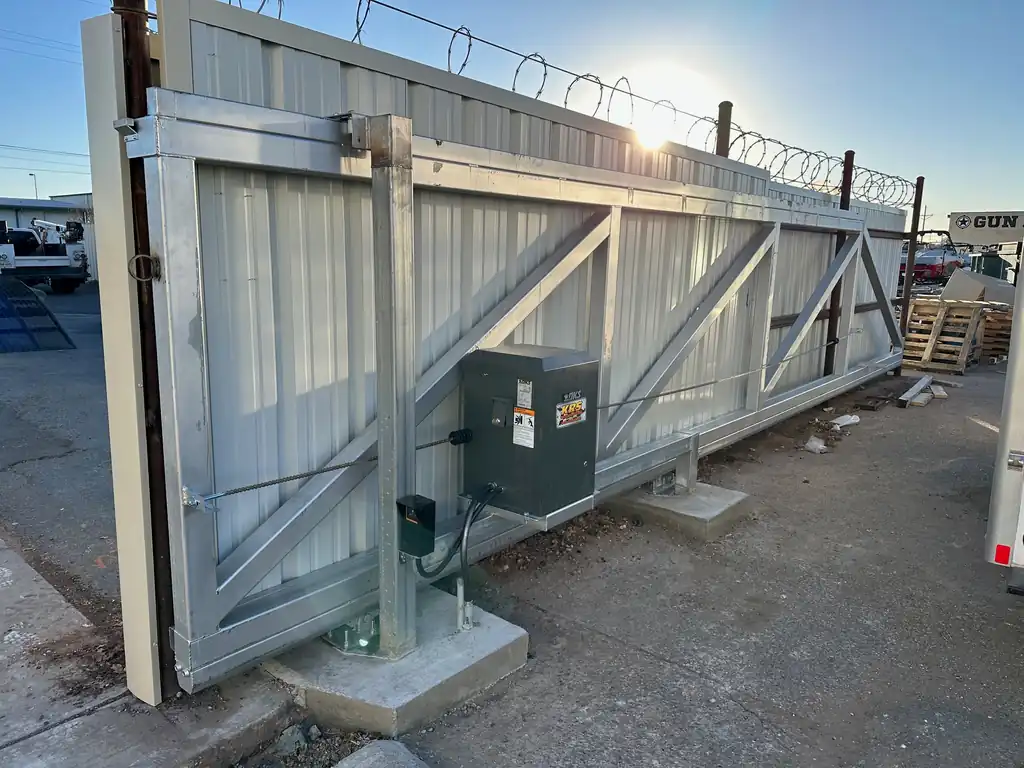
A heavy galvanized industrial cantilever gate with corrugated infill and a DKS operator

Industrial

Wind energy tooling

Lubbock sits in the middle of the West Texas wind corridor, and the tooling a turbine crew needs has to come from somewhere close rather than ship in while the crew waits. KRS fabricates custom tooling and fixtures out of the Lubbock shop, built to a drawing and checked against it rather than against a photograph. It is the same welding bench that builds the galvanized cantilever gates and heavy corrugated infill for industrial sites, just a different set of tolerances.

Read about wind energy tooling

Not sure which one is yours

Most jobs are more than one of these.

A fence with a gate in it. An operator on a gate that already exists. A repair that turns into a rebuild once the truss comes off. Call the shop with the opening width and what has to get through it, or see the work itself in the gallery.