Powder Coat, Galvanizing and Paint: How Each Ages on the South Plains
Bare steel rusts, and powder coat, galvanizing and paint slow that down in three genuinely different ways.
September 3, 2026 · 3 min read
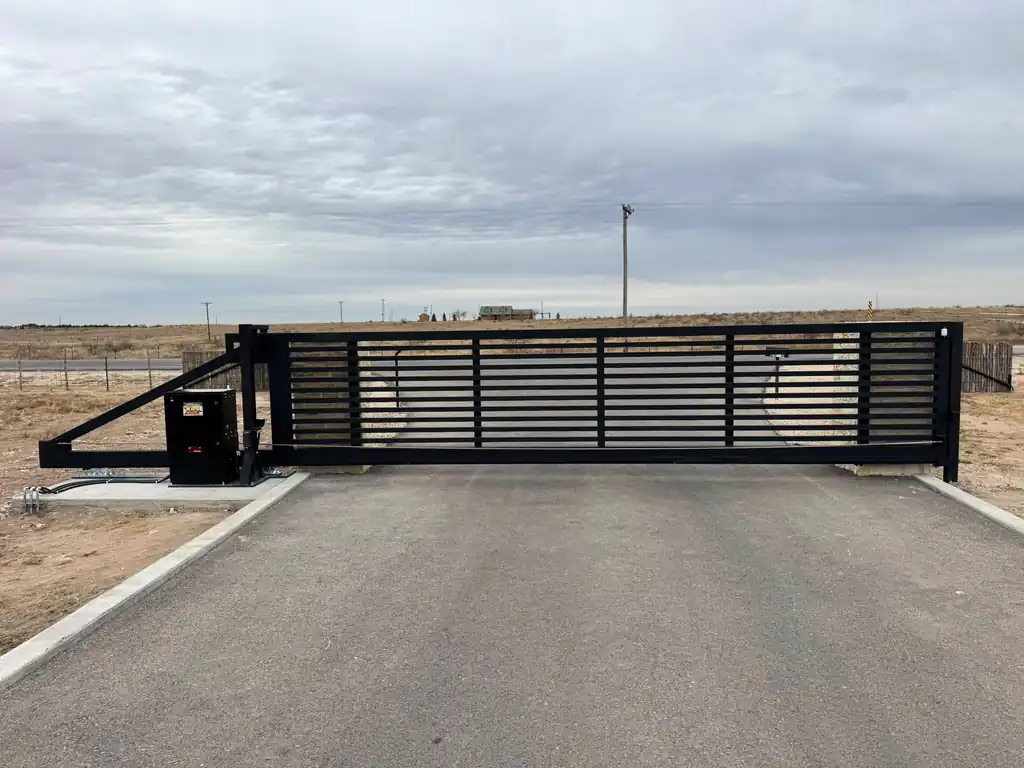
Three Finishes, Three Different Jobs
Bare steel rusts. Every gate and fence finish exists to slow that down, but powder coat, hot-dip galvanizing, and conventional paint do it in different ways, and they hold up differently against blowing sand, hail, and the swing between a hundred-degree July and a hard January freeze that West Texas puts a finish through every single year.
Powder Coat
Powder coat is a dry pigment applied electrostatically and then baked onto the steel, forming a hard, even shell that's thicker and more durable than liquid paint. It resists fading better than paint under strong UV exposure, which matters in a region with as much open sun as the South Plains gets, and it holds color well on ornamental work where the finish is as much a design choice as protection. Its weak point is impact. A hard enough strike, a hailstone at the wrong angle, a rock kicked up by a mower, can chip through to bare metal, and once that happens the exposed spot is a rust starting point unless it gets touched up.
Hot-Dip Galvanizing
Galvanizing runs steel through molten zinc, and the zinc reacts with the surface to form a coating that's metallurgically bonded rather than just sitting on top like paint or powder coat does. That bond is what lets it resist chipping in a way surface coatings can't, and it keeps protecting even where a scratch does get through, because zinc corrodes preferentially and shields the exposed steel underneath it, a property called cathodic protection. Galvanized steel handles blowing sand and hail impact better than either paint or powder coat alone, which is a large part of why heavier commercial and industrial gate structures are often galvanized first. The trade-off is appearance: raw galvanizing has a dull, mottled gray finish, not a color, so it's frequently powder coated over the top when a specific look matters, combining the impact resistance of one process with the color and UV resistance of the other.
Conventional Paint
Liquid paint is the most flexible finish in terms of color and touch-up, and it's the easiest to repair in the field; a homeowner can often touch up a small scratch themselves. But it's also the thinnest and least durable of the three against sand abrasion and UV breakdown over time, and it needs recoating on a shorter cycle than powder coat or galvanizing in a climate that puts a finish through this much temperature swing and grit.
Maintaining a Finish Once It's On
No finish is truly maintenance-free in this climate. Powder coat and galvanizing both need less attention than paint, but a periodic rinse to clear accumulated dust and pollen keeps grit from acting as an abrasive against the surface every time wind moves across it. Any chip or scratch, regardless of finish, should get addressed reasonably soon rather than left through a full season of temperature swings, because the exposed steel underneath starts oxidizing immediately, and a small spot left alone tends to spread faster once rust gets a foothold. On galvanized steel that's been powder coated over the top, a chip that reaches the zinc layer is less urgent than one that reaches bare steel directly, since the zinc still offers some protection even exposed, but it's still worth a touch-up rather than leaving an opening for the coating to lift further at the edge.
What Actually Wins Out Here
- Blowing sand and grit abrasion: galvanizing holds up longest, powder coat second, paint wears fastest
- Hail and impact: galvanizing resists chipping best because of its metallurgical bond to the steel
- UV and color retention: powder coat holds color better than paint over years of West Texas sun
- Budget and touch-up flexibility: paint is easiest to repair in the field
- Best of both: galvanized steel with a powder coat finish over the top
There's no single right answer for every job. A fence in full sun with no vehicle traffic near it has different priorities than a commercial gate that takes daily wear from grit and the occasional impact. KRS Fabrications works through those trade-offs with the client on each build, matching the finish to the property rather than defaulting to one option across every job.
KRS Fabrications — (806) 548-1260
Call (806) 548-1260More articles
Cantilever Slide Gates vs. Swing Gates: What Your Lubbock Driveway Actually Decides
The gate that suits your neighbor's flat, sheltered lot might be the wrong call for a windy, sloped drive a mile down the road.
What a Gate Operator Actually Has to Survive Out Here
The gate itself can go decades; the motor and drive system that opens it automatically is usually the part that fails first.